
The Complete Guide to Choosing the Right Hearing Aids in 2026
The Complete Guide to Choosing the Right Hearing Aids
Choosing hearing aids can feel overwhelming at first. There are different styles, technology levels, brands, prices, fitting options, smartphone features and care plans to compare. But the right hearing aids can do far more than make sounds louder. They can help you follow conversations, reconnect socially, reduce listening fatigue and feel more confident in everyday life.
At Auzen, we believe better hearing should be easier to access, simpler to understand and more affordable without compromising on professional care. That is why we combine premium prescription hearing aids with expert remote support from certified audiologists, transparent pricing and ongoing online adjustments.
This guide explains how to choose the right hearing aids in the UK, what features matter most, how different hearing aid styles compare and how Auzen can support you from your first hearing check to long-term aftercare.

Why Choosing the Right Hearing Aid Matters
Hearing loss is personal. Two people may have the same level of hearing loss on paper but completely different lifestyles, communication needs and preferences. One person may need help hearing colleagues in meetings, while another may struggle most with family dinners, television, restaurants or phone calls.
The right hearing aids should match your hearing profile, your ear anatomy, your daily environments, your budget and your comfort preferences. A discreet device may be perfect for one person, while another may benefit from a more powerful model with advanced speech-in-noise processing and easier handling.
That is why professional guidance matters. At Auzen, we help you understand your options clearly, compare suitable devices and choose hearing aids designed around real life rather than guesswork.
Ready to start? Book a free appointment with our hearing specialists.
Understanding Hearing Loss Before You Buy
 Hearing loss can develop for many reasons. Age-related hearing loss, also called presbycusis, often appears gradually and commonly affects higher-frequency sounds first. This can make speech seem unclear, especially when several people are talking or when there is background noise.
Noise exposure can also contribute to hearing loss. Repeated exposure to loud music, machinery, concerts or noisy workplaces may damage hearing over time. Some medical conditions, including Ménière’s disease and otosclerosis, can also affect hearing and may require specialist medical assessment.
Tinnitus is another common concern. It is often described as ringing, buzzing, humming or whistling when no external sound is present. While hearing aids do not “cure” tinnitus, many modern devices include sound therapy or tinnitus management options that may help some users feel more comfortable.
Hearing loss is typically measured in decibels. Mild hearing loss may make soft speech difficult to hear, while moderate loss can make normal conversations challenging, particularly in noise. Severe and profound hearing loss usually require more powerful solutions and careful professional support.
Important: If you are unsure where you stand, an online screening can be a helpful first step. For more complex symptoms, sudden hearing loss, ear pain, dizziness or one-sided hearing changes, you should seek medical advice from an ENT specialist or hearing healthcare professional.
Signs You Might Need Hearing Support

Hearing loss often develops slowly, which makes it easy to adapt without realising how much effort listening has started to take. You may benefit from hearing support if you often ask people to repeat themselves, feel that others are mumbling, turn the television volume higher than others prefer or struggle to follow conversations in restaurants and family gatherings.
Other signs include missing phone calls, doorbells or alarms, hearing better in one ear than the other, feeling exhausted after social events or receiving comments from friends and family that your hearing may have changed.
One of the most overlooked signs is listening fatigue. When your brain has to work harder to fill in missing sounds, social situations can become tiring. This may lead some people to avoid gatherings, withdraw from conversations or feel less confident in public.
Think your hearing may have changed?
If two or more of these signs sound familiar, take Auzen’s online hearing test and speak with our team about the next step. we also recommend that you make an appointment with an ENT.
Prescription Hearing Aids vs OTC Devices
Over-the-counter devices may be available without a professional assessment, but they are usually designed for simpler amplification needs and may offer limited customisation. They can be lower in cost, but they often lack the advanced programming, personalised fitting and ongoing professional support that many people need.
Prescription hearing aids are different. They are professionally selected and programmed according to your hearing profile. They can support a wider range of hearing loss levels and may include advanced features such as automatic noise reduction, directional microphones, Bluetooth streaming, rechargeable batteries, tinnitus options and remote fine-tuning.
Auzen focuses on premium prescription hearing aids because better outcomes usually depend on more than the device itself. You also need the right fitting, the right settings and the right support as your hearing adapts.
Read More about Hearing Aids vs OTC Devices
Main Types of Hearing Aids Explained

Modern hearing aids are smaller, smarter and more comfortable than many people expect. The best style for you depends on your hearing loss, ear shape, dexterity, lifestyle and personal preference.
Behind-the-Ear Hearing Aids
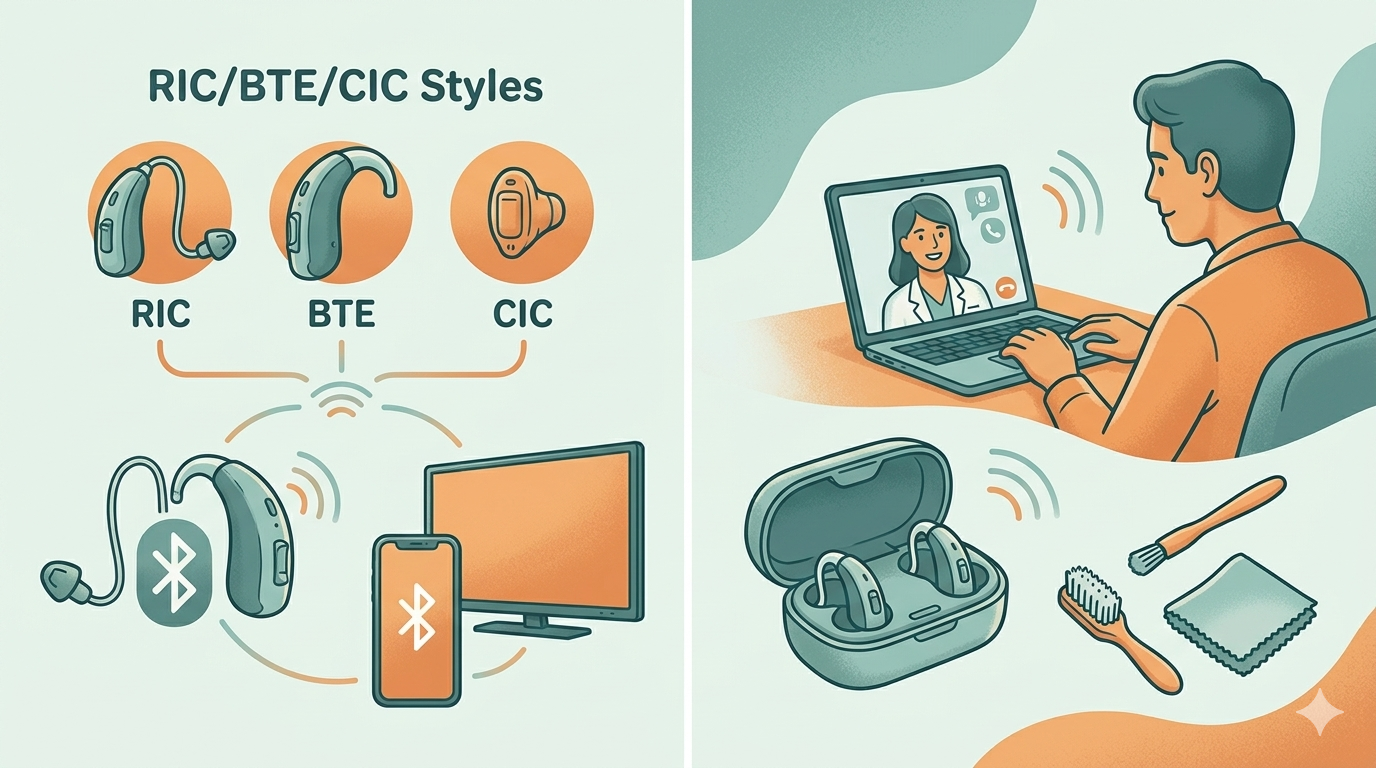
Behind-the-ear hearing aids sit behind the ear and send sound into the ear through tubing or a receiver system. They are powerful, durable and suitable for a wide range of hearing loss levels, including more significant hearing needs.
BTE devices can be easier to handle and clean, making them a good option for users who prefer a slightly larger device. They also have more room for advanced features and battery power. The trade-off is that they may be more visible than smaller styles.
Receiver-in-Canal Hearing Aids
Receiver-in-canal hearing aids are among the most popular choices because they balance comfort, discretion and performance. The main body sits behind the ear, while a thin wire connects to a small receiver placed in the ear canal.
RIC hearing aids can provide excellent sound quality and are often suitable for mild to severe hearing loss. They are also a strong choice for first-time users because they feel light, discreet and natural for many wearers.
Mini/Slim RIC Hearing Aids
Mini or Slim RIC hearing aids offer many of the advantages of standard RIC models in a smaller, more stylish design. They are ideal for people who want advanced technology with a more discreet appearance.
Many modern Slim RIC models include rechargeable batteries, smartphone connectivity and advanced feedback cancellation. They are especially popular with active users who want strong performance without a bulky look.
Completely-in-Canal Hearing Aids
Completely-in-canal hearing aids sit inside the ear canal and are designed for maximum discretion. They are often chosen by adults who prioritise a nearly invisible hearing aid and have mild to moderate hearing loss.
CIC hearing aids can offer a natural listening experience because of their placement in the ear canal. However, they may be more delicate, can be more affected by earwax and moisture, and may not be suitable for every level of hearing loss.
Explore Auzen’s CIC hearing aids
Key Hearing Aid Features to Look For
Today’s best hearing aids are intelligent listening systems. Instead of simply amplifying everything, they are designed to help you hear speech more clearly while reducing unwanted background noise.
Directional microphones are especially important because they help focus on speech in front of you while reducing noise from other directions. This can make restaurants, group conversations and busy public places easier to manage.
AI-based sound personalisation is another valuable feature. Some hearing aids learn from your preferences and listening environments, reducing the need to manually change settings throughout the day.
Own-voice processing can make your voice sound more natural, which is important for new users. One of the most common early complaints is that “my voice sounds strange”, and this feature can help improve comfort and adoption.
Bluetooth connectivity is now a major consideration. Bluetooth hearing aids can stream calls, music, podcasts, and television audio directly to your ears, depending on the device and smartphone compatibility. Many models are designed for iPhone, Android or both.
Other useful features include feedback cancellation to prevent whistling, wind noise reduction for outdoor use, environmental sound classifiers that adapt automatically and tinnitus support options for users affected by ringing or buzzing sounds.
Not sure which features you actually need? Book a free consultation with Auzen and receive personalised guidance.
Rechargeable vs Disposable Battery Hearing Aids

Rechargeable hearing aids are increasingly popular because they are simple, convenient and environmentally friendly. Most rechargeable models use lithium-ion batteries and charge overnight in a protective case. For many users, this means no more handling tiny disposable batteries or worrying about losing power during important moments.
Disposable battery hearing aids still have advantages for some users. They can be useful for people who travel frequently to places where charging may be inconvenient, or for those who prefer carrying spare batteries rather than relying on a charger.
However, rechargeable models can reduce long-term battery costs and avoid disposing of dozens or even hundreds of small batteries each year. For many modern users, rechargeable hearing aids offer the best combination of convenience and performance.
To keep your devices performing at their best, use the right cleaning tools and wax filters. Auzen also offers care kits and accessories to support daily maintenance.

How Auzen’s Remote Hearing Care Works
Auzen’s remote-first hearing care model is designed to make expert support easier to access from home. Instead of relying only on physical clinic visits, you can receive guidance, fittings and follow-up care online.
The process starts with your hearing information. You can submit an existing audiogram or begin with Auzen’s online hearing screening. From there, our hearing specialists help you understand your results and recommend hearing aids based on your profile, budget and lifestyle.
Once you choose your devices, they are delivered directly to your door. Auzen then supports your initial fitting online, followed by ongoing remote adjustments and consultations. This is especially helpful because hearing aid settings often need fine-tuning as your brain adapts to amplified sound in real-world environments.
Remote care can also save time and remove common barriers such as travel, mobility challenges, distance from clinics or busy schedules. With Auzen, support is designed to fit around your life.
Expert hearing care from home
Auzen combines premium prescription hearing aids with certified audiologist support, online fittings and ongoing remote adjustments.
How Much Do Hearing Aids Cost with Auzen?
Hearing aid prices vary depending on the technology level, brand, features and performance required. At Auzen, pricing is designed to be transparent.
Auzen organises hearing aids into technology lines to make choosing easier. Essential models are suitable for simpler listening needs, while Comfort, Advantage and Excellence options offer increasing levels of performance for busier lifestyles, group settings, meetings, restaurants, sport, music and streaming.
Auzen packages include important value-added support such as a hearing aid charger, cleaning kit, a 30-day trial period, and unlimited online support and adjustments with a certified audiologist.
This matters because the true cost of hearing aids is not only the device. It is also the quality of fitting, aftercare, warranty, support and long-term comfort.
Start comparing options in Auzen’s hearing aid collection.
FAQs
What are the best hearing aids for first-time users?
RIC hearing aids are often a strong choice for first-time users because they are discreet, comfortable and suitable for many levels of hearing loss. However, the best option depends on your audiogram, lifestyle and preferences.
Are rechargeable hearing aids worth it?
For many people, yes. Rechargeable hearing aids remove the need to change tiny batteries, reduce waste and simplify daily use. They are especially convenient for users who can charge their devices overnight.
Can I buy hearing aids online safely?
Yes, provided you choose prescription hearing aids with professional support. Auzen combines online convenience with certified audiologist guidance, remote fitting and ongoing adjustments.
Do I need an audiogram before buying hearing aids?
An audiogram is the most accurate way to understand your hearing profile. If you already have one, you can submit it to Auzen. If not, you can start with a free online hearing test and receive guidance on the next step.
How long does it take to get used to hearing aids?
Many people notice benefits quickly, but full adjustment can take time. Your brain needs to relearn sounds it may not have heard clearly for years. Regular use and professional fine-tuning can make the transition easier.
Take the First Step Towards Better Hearing
Better hearing starts with clarity: understanding your hearing, knowing your options and choosing support that continues after your devices arrive.
With Auzen, you can access premium prescription hearing aids, expert remote care, transparent pricing and ongoing adjustments from home. Whether you are comparing discreet CIC models, powerful RIC devices, rechargeable technology or Bluetooth hearing aids, our team can help you choose with confidence.
Ready to take the next step?
Do not just hear better: choose support that helps you feel confident every day.
